
Guide to safe gambling practices in the UK
If gambling is new to you, the idea of staying safe might feel like one more thing to worry about. It is not. Safe gambling is just a set of simple habits that keep the fun in the game and the stress out of it. Every online casino we list holds a valid UK licence. This means the UK Gambling Commission checks that they play fair and offer tools to protect you. On this page, we walk you through five easy rules to follow, the free tools that help, and where to turn if you ever need support.

Nikola is a full-stack developer, a top-rated Upwork freelancer for over five years, and a tech enthusiast who loves building and optimising platforms in the iGaming space. After working directly with the teams behind industry giants like Bonusfinder.com and Gambling.com, he walked away with a deep, firsthand understanding of what players like and dislike when navigating the gambling world. He decided to use the market knowledge he gained, his technical expertise, and a natural curiosity for AI tools to create the next generation of information products for gamblers. Now, his focus is on building a truly innovative AI-powered product that gives players the transparent, accurate, and real-time insights they need to play smarter.

Tago is an online casino and sports betting content expert with experience at some of the most popular casino comparison sites, BonusFinder.com and Gambling.com Group, where he worked alongside Nikola. As an SEO Specialist, he supported content creation across 14 markets, including the UK, Italy, Canada, New Zealand, and Japan. He brings deep expertise and insider knowledge of how the gambling industry operates. Not just as a writer, but as a player who tests the games he covers. He also loves technology (one of the reasons he started Gamblexity) and spends his free time learning to code, currently exploring web3 technologies. His go-to slot is Starburst by NetEnt, which says plenty about his standards.
Here is what this guide covers:
- What safe gambling means and why it matters
- The types of gambling available in the UK
- Five simple habits to keep your gambling fun and safe
- How to set up the free tools every UK-licensed site must offer
- Where to find help if you ever need it
- The real numbers behind safer gambling in the UK
What is safe gambling?
Safe gambling means keeping control of your time and money so that betting stays fun and never becomes a problem. It is not about stopping. It is about setting boundaries before you start, knowing the warning signs, and using the free tools that every UK-licensed site must offer.
The UK Gambling Commission requires every licensed operator to promote safer gambling. That means the tools are already built into the sites you use. You just need to switch them on.
Types of gambling in the UK
The UK has five main types of legal gambling, and the same safety rules apply to all of them. Whether you play slots, bet on football, or buy a lottery ticket, the habits and tools in this guide will keep you safe.
| Type | What it is |
|---|---|
| Online casinos | Slots, roulette, blackjack, and other table games on your phone or computer. These are the most common sites we review. |
| Sports betting | Football, horse racing, tennis, and dozens of other sports. You can bet before the event or while it is happening. |
| Bingo | Hugely popular in the UK, both online and in physical halls. |
| The National Lottery | The best-known form of gambling in the country. Scratchcards and draw tickets count too. |
| Poker | Play against other players rather than the house. Many online casinos also host poker tournaments. |
No matter which type you prefer, every licensed operator must offer the same safer gambling tools.
1. Set your limits before you play

The safest way to gamble is to set your limits before you start. Think of it like deciding how much cash to take on a night out. Every UK-licensed site must let you set deposit limits. This means you decide the maximum amount you can add to your account in a day, a week, or a month. Once you hit that limit, the site will not let you deposit more. You can also set time limits to control how long you play. These tools are free, easy to find in your account settings, and they keep the fun from turning into stress.
2. Only play when you are sober and calm
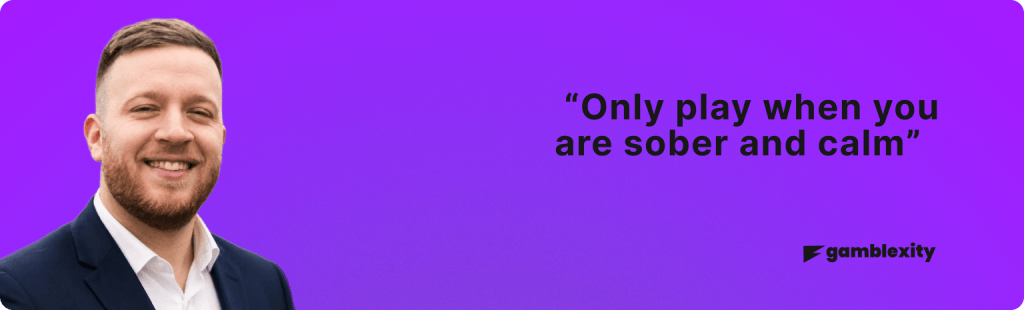
Never gamble when you are upset, stressed, or have had a drink. Alcohol and strong emotions make it hard to think clearly. You might ignore the limits you set, or bet more than you planned. Gambling is meant to be fun. If you are using it to escape a bad day, that is a sign to step back and try something else instead.
3. Don’t chase your losses
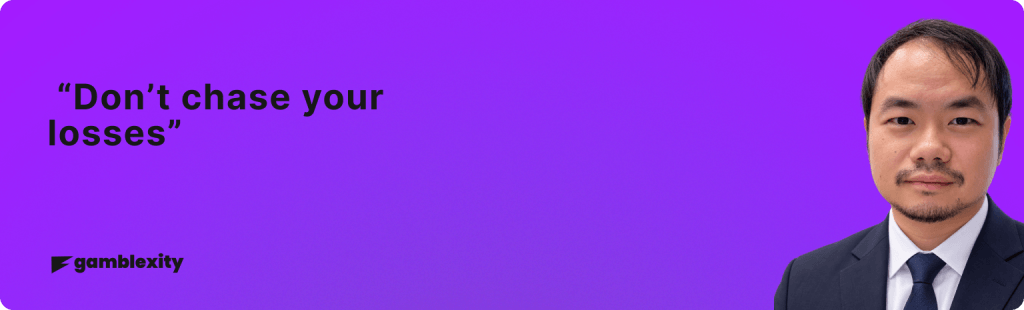
Chasing losses is the fastest way to turn a fun session into a problem. This means trying to win back money you have lost by placing bigger or more frequent bets. It rarely works. Accept losses as the cost of the entertainment. If you hit your limit, close the app and walk away. The money you spent is the price of the game, not a debt you need to repay.
4. Only gamble money you can afford to lose

Only use spare money for gambling. Never use cash meant for rent, bills, or food. Treat every £ you bet as the cost of a fun night in, not as a way to make money. Never borrow money to gamble, and never dip into your savings. If gambling starts to affect your everyday spending, it is time to stop and take a break.
5. Know when to walk away

The most important skill is knowing when to stop. If gambling stops feeling fun, or you feel anxious about your losses, it is time to walk away. There is no shame in taking a break. In fact, it is the smartest move you can make. If you need help stopping, there are free tools and people who can support you. We cover those in the next sections.
How to use and set up safe gambling tools
You can set up all of these tools in one visit to your account settings. Here is exactly how to find and activate them on a typical UK-licensed site.
- Find the safer gambling menu. Log into your account and look for a link called “Safer Gambling,” “Responsible Gambling,” or “Account Limits.” It is usually in the main menu, the footer, or under “My Account.”
- Set a deposit limit. Deposit limits let you cap how much money you can add to your account. Choose the maximum amount you want to deposit over a day, a week, or a month. Enter the amount and confirm. The site will not let you add more once you hit that cap. You can lower this limit at any time. Raising it may require a cooling-off period.
- Turn on reality checks. Reality checks pop up on your screen while you play to tell you how long you have been gambling and how much you have spent. Set how often they appear. Most sites offer intervals of 15 minutes, 30 minutes, or 60 minutes.
- Request a time-out. Time-outs let you block yourself from the site for a short break, from 24 hours up to six weeks. Look for “Take a Break” or “Time-out” in the safer gambling menu. Once activated, you cannot log back in until the period ends.
- Register with GAMSTOP. Self-exclusion means you block yourself from all licensed UK gambling sites for a longer period, usually six months or more. The main service for this is GAMSTOP. Sign up for free and choose six months, one year, or five years. Once registered, every UK-licensed site must refuse your account.
Where to find help
Help is free, confidential, and available right now if you need it. You do not have to handle anything alone.
| Organisation | What they offer | How to reach them |
|---|---|---|
| GAMSTOP | Free self-exclusion from all UK-licensed gambling sites. | gamstop.co.uk |
| GamCare | Free support, counselling, and a self-assessment tool. | gamcare.org.uk |
| BeGambleAware | Advice and practical tools to keep your gambling safe. | begambleaware.org |
| The National Gambling Helpline | Free and confidential support, open 24 hours a day, seven days a week. | Call 0808 8020 133 |
Safe gambling guides
-
GAMSTOP
GAMSTOP offers free self-exclusion from all UK-licensed gambling sites.
-
GamCare
GamCare provides free support, counselling, and a self-assessment tool.
-
BeGambleAware
BeGambleAware gives advice and practical tools to keep your gambling safe.
-
The National Gambling Helpline
The National Gambling Helpline is open 24 hours a day, seven days a week. Call 0808 8020 133 for free and confidential support.
Gamblexity is built with safety in mind. You can ask any questions related to safety in gambling in the UK.
Start chattingThe reality: what the data tells us
Most UK gamblers know about safer gambling tools, but very few actually use them. The numbers show a clear gap between knowing and doing.
| What the data shows | Figure | Source |
|---|---|---|
| UK adults who gamble regularly (2024) | 48% | UK Gambling Commission |
| Adults classified as problem gamblers, PGSI 8+ (2024) | 2.7% | UK Gambling Commission |
| Adults who know about deposit limits but have never used them (2020) | 51% | UK Gambling Commission |
| Adults who have ever used a deposit limit (2020) | 8% | UK Gambling Commission |
| Adults who have ever used a time-out (2020) | 4% | UK Gambling Commission |
| Adults who have ever used reality checks (2020) | 5% | UK Gambling Commission |
| Adults who have ever used self-exclusion (2020) | 6% | UK Gambling Commission |
| Adults who reduced everyday spending due to gambling (2024) | 6.7% | UK Gambling Commission |
| Adults who used savings or borrowed money to gamble (2024) | 5.7% | UK Gambling Commission |
| Adults who lied to family about gambling (2024) | 6.0% | UK Gambling Commission |
| Total GAMSTOP registrations since 2018 (2024) | 532,484 | GAMSTOP |
| Safer Gambling Week 2024: accounts activating at least one safety feature | 1.5 million (+22% year on year) | Betting and Gaming Council |
The most striking number is the awareness gap. Over half of UK gamblers know that deposit limits exist, but fewer than one in ten have ever set one. The tools are free and built into every licensed site. The difference between staying safe and sliding into harm is often one simple decision made before the first bet.
You can explore the full data on the UK Gambling Commission, GAMSTOP, and Betting and Gaming Council websites.
PGSI stands for the Problem Gambling Severity Index. A score of 8 or more signals problem gambling.
Your safe gambling checklist
Safe gambling comes down to five simple habits. If you only remember one thing from this page, make it this: decide your limits before you play, and stick to them.
Here is a quick reminder of what we covered:
- Set your deposit and time limits before you start.
- Only gamble when you are sober and in a good mood.
- Never chase your losses. Treat them as the cost of the fun.
- Only use spare money. Never touch cash meant for bills or savings.
- Know when to walk away, and use the free tools if you need them.
If you want to know who we are and why we only recommend UK-licensed sites, visit our about us page. To see exactly how we test and rate casinos before we list them, read our how we review page. If you want to find other brands run by the same gambling company, try our sister sites finder.
Recommended reading
If you found this guide useful, here is where to go next. These pages will help you find a safe casino, understand who runs it, and learn how we test every site we recommend.
- See exactly how we test every site before we list it on our how we review page.
- Browse every licensed gambling company in the UK.
- Find a safe, licensed online casino to play at.
- Discover other brands run by your favourite operator with our sister sites finder.


